Therapy as a hero’s journey?
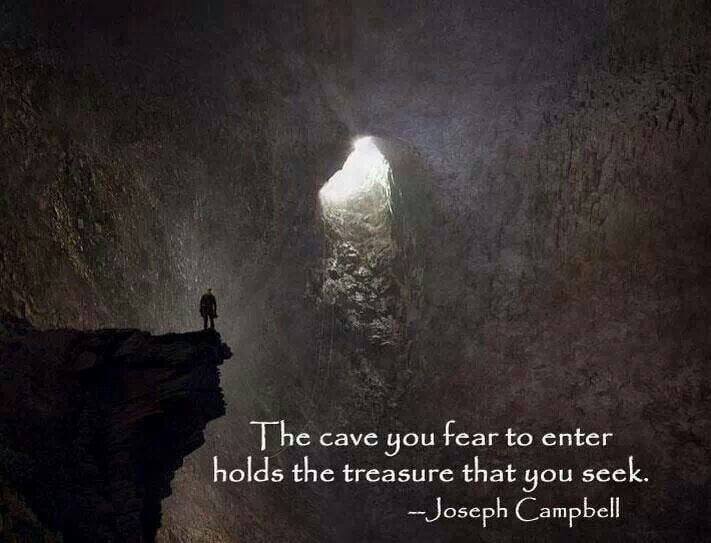
Arielle Schwartz, in her book The Post-Traumatic Growth Guidebook: Practical Mind-Body Tools to Heal Trauma, Foster Resilience and Awaken Your Potential, introduces the idea of looking at trauma recovery as a hero/heroine’s journey. She grounds this in Joseph Campbell’s hero’s journey as a classic plot structure that has inspired a variety of literary and cinematographic works for generations (for me Star Wars is a key exemplar!). Schwartz suggests that Campbell’s hero’s journey can also be applied to trauma healing. People can relate to this journey as they find themselves triggered into a crisis due to a traumatic event, the accumulation of stress or memories of abuse or neglect. The book is called The Hero with a Thousand Faces, and Campbell’s three-part presentation of the hero’s journey encompasses departure (embracing the journey), initiation (confronting and accepting change) and the return (maturing and moving forward). This echoes the stages of development of the human psyche, which involves transitioning from childhood to adulthood to the individuation or full realisation of Carl Jung’s vision of the human psyche’s developmental climax — emotional maturation and connection with the transcendent.
I thought I’d look at this in more depth.
How is the hero’s journey connected to self-development?
You might be wondering what storytelling has to do with self-development. Before we dive into the hero’s journey (whether that is a male or a female hero’s journey), context will be useful. Campbell was heavily inspired by the work of Carl Jung, the ground-breaking psychologist who throughout his life worked on theories such as the shadow, collective unconscious, archetypes, and synchronicity.
Jung’s greatest insight was that the unconscious is a vast, vibrant landscape, yet out sight from the ordinary conscious experience. Jung didn’t only theorize about the unconscious; he provided a huge body of work explaining the language of the unconscious, and the way in which it communicates with the conscious mind.
The nature of the unconscious
The unconscious is the vast sum of operations of the mind that take place below the level of conscious awareness. The conscious mind contains all the thoughts, feelings, cognitions, and memories we acknowledge, while the unconscious consists of deeper mental processes not readily available to the conscious mind. Much learning takes place outside of conscious awareness. Similarly, many of the elements that go into judgments and decision-making are processed outside of awareness. Intuition, too, is a product of unconscious mental operations, a set of assumptions swiftly assembled from cumulative knowledge and experience. Much of human motivation and interpersonal attraction also take shape beyond conscious awareness.
For Jung, the creative process is one in which contents of the unconscious mind are brought to light. Enter storytelling and character development — a process of myth-making that somehow captures the truth of deep psychological processes.
“Consciousness is like a surface or a skin upon a vast unconscious area of unknown extent… we need a laboratory with very complicated apparatus in order to establish a picture of that world apart from our senses and apart from our psyche… very much the same with our unconscious — we ought to have a laboratory in which we could establish by objective methods how things really are when in an unconscious condition”.
Jung, C.G., Hull, R.F.C., trans., ” Tavistock Lectures: Lecture 1″ in Collected Works, Vol. 18, (London: Routledge Kegan Paul, 1977) par. 11
Surprising as it would seem to observers in the 1930s, the understanding of consciousness and the unconscious mind which has started to emerge in cognitive science and neuroscience has many affinities with the conceptions of C.G. Jung. As paradigms shift, in many ways, Jung’s understanding of the psyche and of what it is to be human seem to have grown in stature and explanatory power.
Campbell saw the power of myth in igniting the unconscious will to grow and live a meaningful life. With that in mind, his structure offers a tool of transformation and a way to inspire you to work towards your own hero’s journey.
The hero’s journey
Campbell describes seventeen steps to the hero’s journey; I will collapse these down into three stages:
- Departure
- Initiation
- Return
These roughly follow the three phases of trauma therapy:
- Phase 1 – stabilisation and safety
- Phase 2 – trauma processing
- Phase 3 – reconnection and reintegration
The usual hero adventure begins with someone from whom something has been taken, or who feels there is something lacking in the normal experiences available or permitted to the members of society. The person then takes off on a series of adventures beyond the ordinary, either to recover what has been lost or to discover something life changing. It’s usually a cycle, a venturing forth and a returning.
Let’s take a closer look at each of the steps below looking at how the hero’s journey unfolds, and how when the hero ventures forth, he or she undergoes an inner process of awakening and transformation.
1. Departure
Usually clients begin to be aware that something significant is missing from their life. They notice that they are living on other people’s terms, or simply questioning if this is what they want. At this point life is lived, but not deeply satisfying. Many of us embark on inner-journeys following hardship in life — perhaps the death of a loved one, the loss of a job, or physical or mental illness. This stage occurs when it becomes apparent that, to move through suffering, one has to look within. And yet this call to move forward, to address these issues, is sometimes avoided, as fear and self-doubt surface and the purpose of this new life direction is questioned. Is it worth it? Do you have the courage? The only way to grow and live a deeply fulfilling life is to face the discomfort of suffering. At this stage, fears, and anxieties about delving deep into the psyche arise. The temptation is to avoid discomfort, and to stay in your familiar world. When the journey of exploration does begin, people or situations often enter your life at just the right time, guiding you in the right direction. This could be a close friend, a peer, or a professional, such as a coach or therapist. Whatever your life was before the call to action, you accept the challenge, knowing your life may never be the same. This is a point of empowerment, where you realise that journeying within will lead you to greater self-understanding, even if those insights will dramatically change your life direction.
2. Initiation
Now you have moved outside of your comfort zone and the true test begins as the initial burst of inspiration might be tested by the difficulty of the task. You might meet people who are able to offer advice or guide you, or those who reflect areas of yourself you must work on. Often, these are inner experiences, in the forms of memories, emotions, or outward tests, such as difficult circumstances that challenge your resolve and commitment to your new life direction and where again self-doubt and fear can arise, as another threshold has to be crossed. This is often a period of respite, giving the hero time to pause and reflect. There may be quick wins in the beginning — your new life direction may go well, or inner-work may lead you to a new place of calm or confidence. But then, out of nowhere, comes an even bigger test, surfacing as a challenge to the person you’ve become. Life often has a way of presenting the right trials at the right time and these have to be confronted on the journey of self-discovery. This might be in the form of trauma that has to be confronted and healed, people with whom you have to have difficult conversations, or fears you have to face, actions that in the past you never thought you’d be capable of. With the skills you’ve learned along the way, this time you’ll be ready, but it may not be easy. When confronting deep inner fears or challenges, you are rewarded with a deep understanding or breakthroughs. You might achieve a significant goal or inwardly having a sense of peace or reconciliation with your past, or with moments that have previously felt unresolved. There may be the realisation that behind suffering and pain lies freedom or inner peace.
3. Return
At this point the hard work has been done, the ultimate fear confronted, and new knowledge found. Now, what’s the next step? For many, the initial stages of growth come with a period of renunciation or are symbolised by an outward journey away from what is known, away from familiarity. Then comes the stage of returning to familiarity, or the things left behind — these may be family, friends, locations, or even your former sense of who you were, that were once loved and sacrificed during the journey. You’re returning home a different person. Having faced incredible hardship, the hero returns with added wisdom and maturity. There is a sense of hope, freedom, and a new perspective on life and even on your ‘self’. Following a transformative process, there’s an understanding of what is within your control and what is not. The “ordinary world” may have many elements that remain the same, but this is accompanied by a realisation that when you change, so does your reality. Previous modes of thinking and acting may be replaced as bridges are built with your past, giving opportunity for a new approach to life.

What can we learn from the hero’s journey?
I reflected on the notion of coming full circle — to begin a journey, outwardly or inwardly, before finding yourself back at the beginning, transformed. In spiritual traditions, the circle is a powerful symbol of timelessness, death and rebirth, totality, and wholeness. The steps of the hero’s journey are depicted as a circle and it’s not a coincidence. Above all else, it’s a reminder that we each within us have a purpose, a quest and a mission in this life that can and will invoke our truest potential. The path isn’t easy — there are many, many challenges along the way. But at the right time, people and situations will come to our aid.
If you’re able to confront the mission head-on and take bold steps along the way — just like all the heroes of history or fiction before you, from Heracles to Joan of Arc to Luke Skywalker to Daenerys Targaryen — then you will be transformed, and then you can return to where you started, reborn, ready to share your gifts and your lessons with the world.