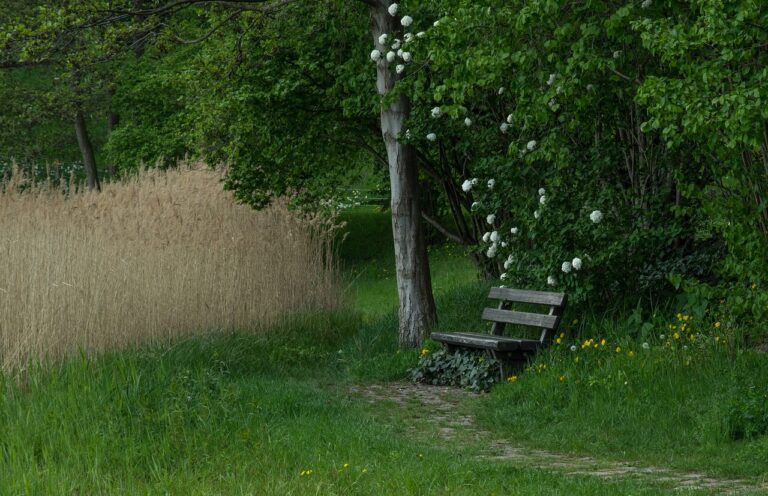
There was a time when human life had edges.
Morning arrived slowly, carried by light rather than alarm tones. Work belonged to places, and when people left those places, work released its claim upon them. Night imposed a natural boundary that could not be negotiated. Winter demanded conservation. Distance protected solitude. Silence existed not as emptiness but as restoration. The human nervous system was shaped inside those limits.
It evolved among rhythms that alternated reliably between effort and recovery, danger and safety, connection and withdrawal. The body learned that activation would end, that stress would resolve, that stillness would follow movement like an exhale follows breath. Modern life, however, has softened or erased many of these edges. We live in a world without clear endings. Messages arrive without pause. News cycles never sleep. Productivity stretches indefinitely into evenings and weekends. Social connection persists without physical presence, creating a strange paradox: constant contact alongside profound loneliness. We are reachable everywhere, and therefore never entirely at rest.
The nervous system does not recognise this arrangement as normal, it experiences it as unfinished survival.
The Architecture of the Nervous System
Deep beneath thought and intention lies the autonomic nervous system — an ancient regulatory intelligence that continually asks a single question: Am I safe enough to live, or must I prepare to survive?
This system moves through states rather than decisions. When safety is sensed, the body opens toward connection, curiosity, digestion, creativity. When threat appears, energy mobilises: heart rate rises, attention narrows, muscles prepare for action. If threat becomes overwhelming or inescapable, another response emerges — collapse, numbness, withdrawal. These are not psychological weaknesses, they are biological strategies refined over millions of years. Crucially, the nervous system depends on completion. Activation must resolve. Stress must discharge. Experience must reach an ending so the body can return to equilibrium.
Boundaries are what allow completion. A boundary separates effort from rest, self from other, now from later. It creates containers within which experience can begin and end safely. Without boundaries, activation lingers. The nervous system waits for closure that never arrives and waiting becomes strain.
The Always-On World
Modern Western culture quietly celebrates boundarylessness. Availability signals dedication. Busyness signals worth. Exhaustion becomes proof of participation in a shared economic and social race whose finish line continually recedes. Technology amplifies this condition. Devices collapse distance and time, delivering endless streams of information directly into the nervous system. We witness tragedies across continents while sitting in our living rooms. We compare our internal uncertainty against curated external lives. We are asked to respond instantly, decide quickly, adapt continuously. The body interprets constant demand as environmental instability. Not acute danger — something more ambiguous and therefore more taxing, a low-grade vigilance that never fully switches off. Attention fragments. Recovery shortens. Sleep becomes lighter, less restorative. The nervous system remains slightly braced, as though expecting interruption.
This is not dramatic trauma. It is cumulative exposure — a slow layering of unfinished stress responses that gradually reshapes how safety is experienced. Trauma, in this context, is not only what breaks us suddenly, but what wears away our capacity quietly.
The Myth of Infinite Capacity
Modern identity often rests upon expansion: more achievement, more efficiency, more optimisation of time and self. Human limits are framed as obstacles to overcome rather than signals to respect. Yet biology is fundamentally cyclical, every living system requires oscillation. The heart contracts and releases. Breath moves in and out. Wakefulness alternates with sleep. Even attention functions in pulses rather than sustained intensity.
When culture demands linear productivity from cyclical organisms, friction emerges. People begin overriding internal signals — fatigue ignored, hunger postponed, emotional needs minimised. Over time, the nervous system learns that its signals are unwelcome and it increases intensity to be heard: anxiety rises, irritability sharpens, concentration falters. Eventually, when activation cannot resolve, the system protects itself through shutdown. Numbness replaces feeling. Motivation disappears. Burnout arrives not as failure but as enforced boundary — the body creating limits where none were permitted.
What we often call dysfunction may be regulation attempting to restore balance.
Trauma Without Catastrophe
Popular imagination associates trauma with extraordinary events: accidents, violence, disasters. These experiences undoubtedly shape nervous systems profoundly. But trauma also emerges through chronic misattunement between human needs and environmental demands. Small overwhelmings repeated daily accumulate.
The email answered while exhausted.
The conversation endured without emotional safety.
The absence of genuine rest.
The pressure to perform stability while internally struggling.
Each instance may seem insignificant, yet the nervous system records patterns rather than isolated moments. When recovery repeatedly fails to occur, the baseline shifts. Hypervigilance becomes normal, rest feels unfamiliar, even uncomfortable. People begin to live slightly outside themselves — functioning, productive, competent, yet disconnected from bodily ease.
The trauma here is subtle: not the presence of terror, but the absence of restoration.
Boundaries as Biological Mercy
To set a boundary is often framed socially as refusal or rejection. Biologically, however, a boundary is an act of regulation.
It tells the nervous system: there is an end point.
It restores predictability.
It allows energy to settle.

A boundary may be small — closing a laptop at a specific hour, declining a request without elaborate justification, choosing silence over continued stimulation. Yet these moments carry profound physiological meaning, they interrupt endless activation. At first, boundaries can feel uncomfortable, even threatening.
A nervous system accustomed to constant demand may interpret rest as unfamiliar territory. Stillness reveals accumulated fatigue; silence allows emotions long deferred to surface. This discomfort is not evidence that boundaries are wrong, it is evidence that the body is relearning safety. Gradually, regulation returns. Breath deepens. Muscles release chronic tension. Attention expands beyond survival tasks toward imagination and play.
The organism remembers another way of being.
Connection and the Paradox of Modern Loneliness
Humans are profoundly relational creatures. Safety is not merely individual; it is co-regulated through presence with others. Facial expressions, tone of voice, shared rhythm — these cues signal to the nervous system that it does not face the world alone. Modern connection often lacks these regulating signals. Digital communication conveys words but not always nervous-system reassurance. Interaction becomes frequent yet thin, we are exposed to many people while deeply known by few and without embodied connection, stress has nowhere to discharge socially. The nervous system remains responsible for managing activation alone, a task it was never designed to perform indefinitely. Boundaries, paradoxically, make deeper connection possible. By limiting superficial demands, they create space for genuine presence — slower conversations, attentive listening, shared quiet.
Depth requires limits.
Relearning Rest
Rest, in modern culture, is frequently treated as reward — something earned after productivity. Biologically, rest is prerequisite, not prize. Without sufficient restoration, cognition narrows, empathy decreases, resilience diminishes. The nervous system cannot heal while continually mobilised. Relearning rest involves tolerating stillness without filling it, allowing boredom, ending stimulation intentionally and trusting that worth is not measured solely through output. To rest is, in some ways, to resist an economic logic that equates human value with productivity. It is a quiet reclaiming of biological dignity.
This is profoundly counter-cultural work.
Returning to Edges
Perhaps healing in modern life is less about becoming endlessly resilient and more about becoming accurately limited.
To end the day even when tasks remain.
To be unreachable sometimes.
To allow experiences to finish before beginning new ones.
To recognise that a human life is rhythmic, not infinite.
Edges do not confine life; they shape it. A river requires banks to flow. Music requires silence between notes. Meaning emerges through contrast, not constant intensity. The nervous system longs for these edges because within them it can finally rest its vigilance. Trauma flourishes where experience has no boundary and healing begins wherever a boundary is restored — gently, imperfectly, repeatedly.
A closed door.
A slower breath.
A moment not optimised for anything at all.
And slowly, almost unnoticed at first, the body relearns what safety feels like — not as an abstract idea, but as a lived experience of enoughness.
Enough stimulation.
Enough connection.
Enough rest.
Enough.