It was, in part, a month of going further inwards. I found myself deepening my spiritual life and realising that I have a genuine affinity with Taoism and secular Buddhism—not as labels to collect, but as ways of paying attention. I’m drawn to their shared invitation to loosen my grip: to stop treating every thought as an instruction, every difficult feeling as a problem to solve, and every day as something that must be optimised. Martin Aylward’s ideas about embodied meditation helped something click. Rather than trying to escape the body in search of a perfectly quiet mind, I began to understand meditation as a return to sensation—to breath, weight, tension, temperature and the simple fact of being here. Practice started to feel less like an activity I performed and more like a way of inhabiting my own life.
I’ve been trying to bring that awareness into ordinary moments, not only the minutes when I formally sit to meditate. Sometimes it is as small as noticing my feet on the floor while the kettle boils, or letting a thought pass without immediately building a whole future around it. None of this has made me serenely detached; my mind still plans, argues and wanders, but the wandering no longer feels like failure. The practice is in noticing and returning, without punishment. That feels spiritual to me: not certainty about another realm, but a more honest intimacy with this one. I’ve started to shape a syncretic approach, allowing Buddhism and Taoism to sit alongside each other without demanding that either provide every answer. I want a spirituality capacious enough for doubt, science and mystery to coexist.
There has been a physical shift, too. I started going to the gym five times a week and returned to a healthier relationship with food and mealtimes—ordinary rituals that somehow disappeared while I was working. At the same time, I’ve been reading and listening voraciously: spirituality, religion, psychotherapy, philosophy, cosmology, nature and politics. My view of life, and of how I want to live it, is changing quite dramatically. Thinkers such as Richard Dawkins, Daniel Dennett, Christopher Hitchens and Sam Harris often come close to articulating my own outlook, even when I disagree with parts of what they say. Perhaps that is the point: not to find a voice to adopt wholesale, but to notice which ideas sharpen your own.
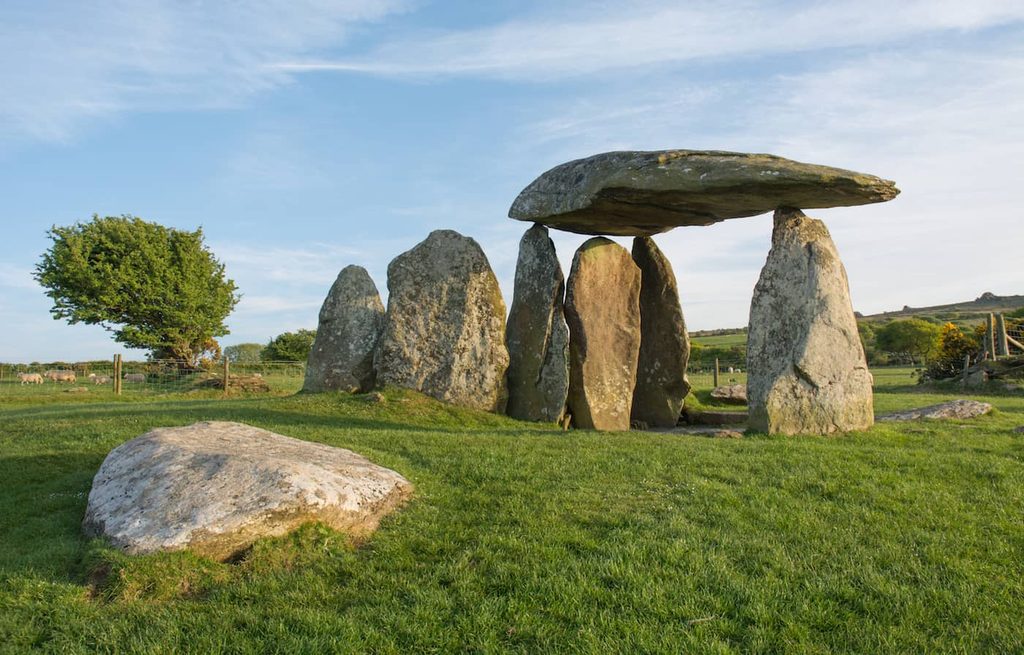
I feel more grounded now—more aware of who I am and where I am in the world. Some of that grounding is physical, some historical and some spiritual: the growing sense that attention itself can be a form of devotion. It has drawn me towards castles, cathedrals and megaliths, places where silence seems to have accumulated over centuries and time feels both enormous and strangely close. I’m currently reading Stone Lands by Fiona Robertson, and it feels apt.
The ancient stones offer a real sense of humanity’s journey: generations looking up at the same sky, shaping meaning from the materials around them, leaving traces that would outlast their individual lives. Standing near such places—or even reading about them—I feel less like a solitary person moving through a private story and more like one small part of a vast, continuous human unfolding.
We are connected not only by culture and memory, but by matter itself. The stone, the body and the stars belong to the same universe; the elements in us were forged through processes unimaginably older than humanity. Remembering this does not make an individual life feel insignificant. It makes it feel held within something larger. August was a month of deepening and extending the journey, but also of beginning to settle: into my body, into a practice, into my questions and into a larger sense of history. Meditation has not given me a neat set of answers. It has, perhaps more usefully, taught me how to feel my place within that continuity, and how to remain present while the questions stay open.